When AI can think, who decides?
A keynote for leadership teams, conferences and whole-employee audiences — on the one part of the job a machine structurally cannot do.
- Formats45-minute keynote · lunch-and-learn · half- and full-day workshops
- AudiencesLeadership teams, conferences, whole-employee sessions
- DeliveryIn person or remote
- Experience20+ years inside Fortune 500 & global organizations
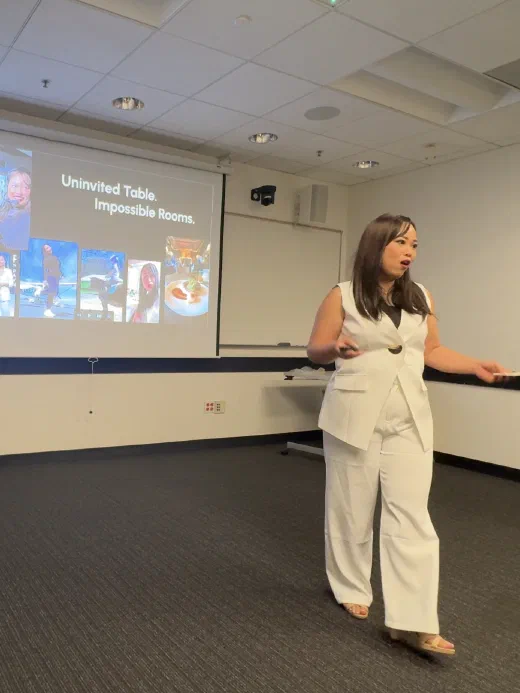
Your audience has already sat through three AI talks this year. They know the technology is moving fast. They have seen the adoption curve, the productivity chart, and the slide about how everything changes.
None of it told them what to do on Monday about the decision sitting in their inbox — the one where a model already has a view and a human still has to sign.
What the room actually gets
- What the technology can now do
- An adoption curve and a warning to adapt
- Case studies from companies nothing like theirs
- The room leaves impressed, and unchanged
- Which decisions should be handed to a machine at all
- Whose name goes on the ones that shouldn't
- What it takes for that person to defend the call under real questioning
- One habit every attendee can use on Monday: form your own view before you ask the machine
The argument itself is simple enough to hold on to. AI has made answers cheap. What it cannot do is be held to account — no legal personhood, no liability, nothing at stake. So as answers get free, the scarce thing becomes a named human who will own a consequential call and stand behind it. That is a fact about liability rather than capability, which is why no model release changes it.
Formats
| Format | Length | Best for |
|---|---|---|
| Keynote | 45 minutes | A conference stage or a whole-employee audience |
| Lunch-and-learn | 45 minutes | The same session, delivered in your building |
| Think Clearly With AI | 50 minutes | Leaders responsible for consequential decisions. USD 5,000 for the first three booked before 31 Oct 2026, USD 7,500 after |
| Pressure Room | 2 hours | A team that wants to practice under pressure rather than be introduced to the idea. USD 12,000 |
| Combined half day | Half day | THINK + Pressure Room + a rehearsal of the agreed rules. 3.5 hours. USD 17,000 |
| Panels and guest lectures | By arrangement | Universities, associations, member events |
The paid work is facilitated Pressure Room practice — decision-making and judgment practice rather than a talk. The room decides inside a living company, watches what moved its judgment and leaves with a standard it can state.
No systems access. No integration. No proprietary company data required for the session.
Why this speaker, for this subject
A decision scientist, not a technologist.
BBA Decision Science, MBA Kellogg with a concentration in authority structures and decision rights, and Stanford-trained in AI leadership. The category is named after the discipline she trained in.
Twenty years inside the rooms she's describing.
More than twenty years in Fortune 500 & global organizations, most recently leading strategic analytics. The examples come from operating reality, which is what stops a senior audience tuning out.
She runs the test she talks about.
The keynote isn't a theory she reads about — it's the front of a practice that puts named decision-makers under live pressure every week, and publishes what the method can and cannot claim.
The speaker
Pav Lertjitbanjong is a Decision scientist and the founder of PAVNESS. She spent more than twenty years inside Fortune 500 & global organizations, most recently leading strategic analytics. BBA Decision Science (University of Kentucky), MBA Kellogg School of Management at Northwestern, Stanford-trained in AI leadership.
Full background on the founder page · press materials on Press & Media.
AI can make the call. It can't take the fall.
Ask us about a date — or anything else.
Tell us about the room and what you have in mind. Fees are set per engagement and we'll walk you through them on the first call.
This goes straight to pav@pavness.com and you'll receive a response within 48 hours. Prefer the calendar? Book a 15-minute scope call.
Book a 15-minute scope call.
Bring the room: who's in it, what they're wrestling with, and the date you're holding. Thirty minutes is enough to know whether this is the right session for them.